
Serving Injury Clients Across New Jersey No Fee Unless We Win Free Case Review Available

Practice Area

Slip and Fall Lawyer in New Jersey

A slip and fall can leave you dealing with pain, medical treatment, missed work, and questions about who is responsible.

What looks minor to others can become a serious injury when the fall causes a fracture, back injury, head injury, concussion, or long-term mobility problem.

If you were hurt on someone else's property in New Jersey, do not assume the insurance company will fairly evaluate what happened. Pinnacle Injury Law can review the dangerous condition, available evidence, notice issues, insurance coverage, deadlines, and the next steps that may protect your claim.

We represent injured people across New Jersey, including Bergen County and nearby communities.

  • New Jersey slip and fall claims
  • Dangerous condition and notice review
  • Evidence, insurance, and deadline review
  • Bergen County and nearby communities
  • Clear next steps before any representation begins

A property owner, business, landlord, tenant, management company, or maintenance contractor is not automatically responsible just because a fall happened. The key issue is whether the person or company responsible for the property failed to act reasonably under the circumstances.

A claim may depend on questions such as:

  • What caused the fall?
  • Who controlled the area?
  • Did the owner, business, or staff know about the hazard?
  • Should the hazard have been discovered through reasonable inspection?
  • Was the danger created by the property owner, employee, contractor, or another party?

  • Were warning signs, mats, barriers, lighting, or cleanup procedures used properly?
  • Was the injured person lawfully on the property?
  • What evidence exists before the scene changed?

These cases are fact-specific. A careful review can help determine whether a claim may exist under New Jersey law.

Slip hazard on a walking surface

Slip and fall accidents often happen because a walking surface becomes unsafe. Common hazards include:

  • Wet floors
  • Spilled drinks, food, grease, or cleaning products
  • Freshly mopped or waxed surfaces
  • Rainwater tracked into entrances
  • Snow, slush, or ice near walkways
  • Leaking refrigerators, coolers, pipes, or roofs
  • Poor drainage
  • Unsafe stairs or handrails
  • Loose mats or floor coverings
  • Poor lighting
  • Missing or unclear warning signs
  • Failure to inspect, clean, repair, or block off a dangerous area

The cause of the fall matters because it affects what evidence is needed and who may be responsible.

Fall on stairs where notice and cleanup issues may matter

In many New Jersey slip and fall cases, notice becomes one of the most important issues. Notice generally means the property owner, business, or responsible party knew, or should have known, about the dangerous condition before the fall.

If someone slips on a spill in a store, the claim may turn on how long the spill was there, whether staff saw it, whether inspection routines were followed, and whether the area should have been cleaned or marked sooner.

If someone slips near an entrance during rain or snow, the review may focus on mats, drainage, cleanup practices, recurring hazards, warning signs, and whether the business should have anticipated the condition.

Insurance companies often dispute notice. That is why early evidence preservation can matter.

Fall near property stairs and entryways

Slip and fall accidents can happen in many places, including:

  • Grocery stores and retail stores
  • Restaurants and fast-food locations
  • Apartment buildings and common areas
  • Hotels and motels
  • Office buildings
  • Shopping centers
  • Parking lots and parking garages
  • Sidewalks and entryways
  • Medical offices
  • Schools and public buildings
  • Private homes and rental properties
  • Workplaces and construction sites

The location matters because it can affect who controlled the property, what rules apply, what evidence may exist, and whether special notice requirements apply.

Incident report and evidence for a slip and fall claim

The scene after a fall can change fast. Floors get cleaned. Ice melts. Water dries. Warning signs are moved. Video may be overwritten. Witnesses may leave.

Important evidence can include:

  • Photos or videos of the hazard
  • Photos of the surrounding area
  • Surveillance video
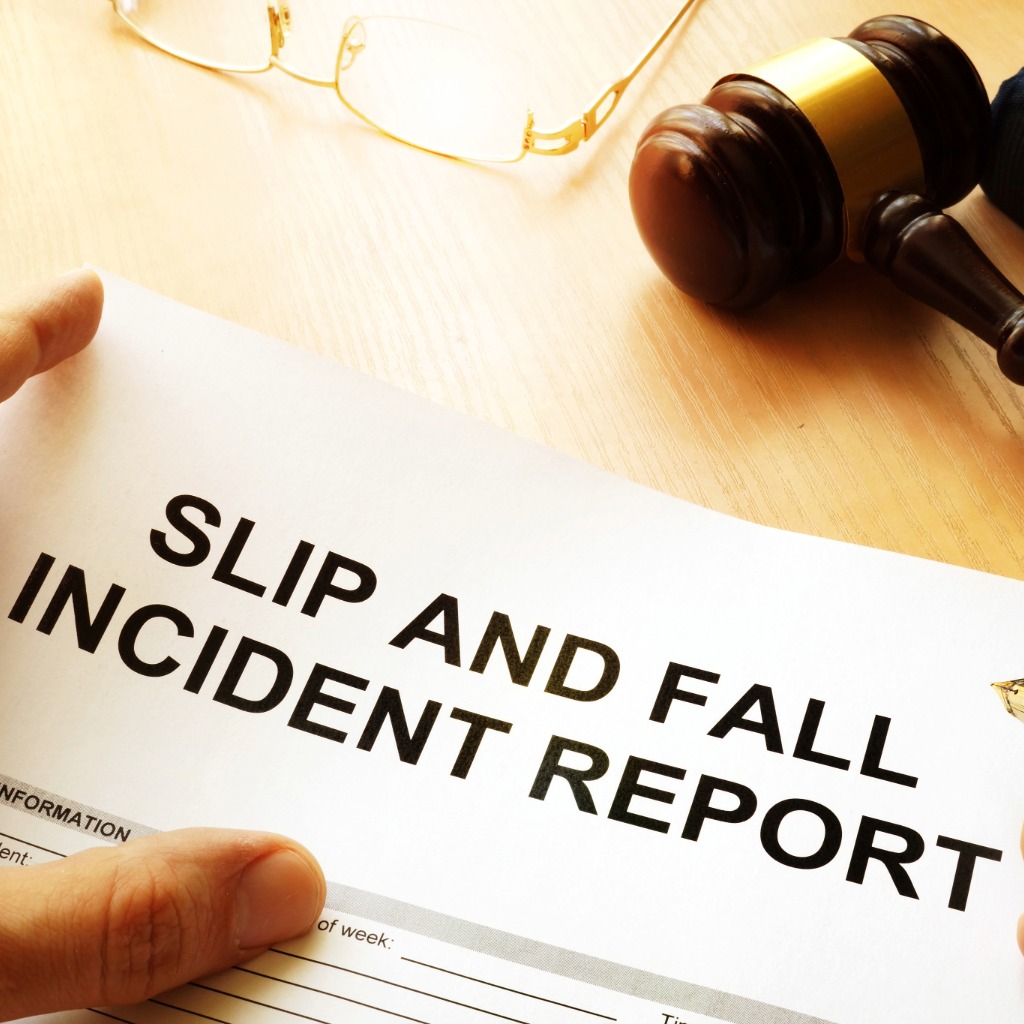
  • Incident reports
  • Witness names and contact information
  • Cleaning logs and inspection records
  • Maintenance records
  • Store policies or inspection routines
  • Weather records where relevant
  • Medical records and injury photographs
  • Shoes and clothing worn at the time of the fall
  • Communications with the property owner, business, or insurer

If possible, evidence should be preserved before the condition disappears or the property owner changes the area.

Injured person after a fall on stairs

Slip and fall cases are often defended by shifting blame to the injured person. The insurance company may argue that the condition was open and obvious, that you should have seen it, that you were distracted, that your shoes caused the fall, or that warning signs were present.

Those arguments do not automatically defeat a claim. The facts still matter, including lighting, visibility, crowding, floor color, the location of the hazard, whether warning signs were actually useful, and whether the area should have been safe for normal walking.

A focused review can help determine whether comparative fault may be an issue and how the evidence supports your side of the story.

Knee injury after a fall on stairs

A fall can cause more than soreness. Depending on how you land and what part of the body takes the impact, injuries may include:

  • Broken wrists, arms, ankles, or hips
  • Knee and shoulder injuries
  • Back and neck injuries
  • Head injuries and concussions
  • Traumatic brain injuries
  • Spinal injuries
  • Cuts, bruising, and scarring
  • Long-term pain or mobility problems
  • Surgery, therapy, or rehabilitation needs

Older adults may be especially vulnerable to serious injury, but people of any age can suffer major harm in a fall.

Fall on icy public stairs where notice rules may matter

Do not wait to have a slip and fall case reviewed. In many New Jersey personal injury cases, the general filing deadline is two years from the date of injury. However, the correct deadline can depend on the facts.

If the fall happened on public property, such as a public building, school, sidewalk, municipal property, government facility, public parking area, or state-owned property, notice requirements may apply much earlier. Public-entity claims may require formal notice within 90 days of accrual.

Because deadlines and notice rules can be strict, it is safer to review the case early.

Older adult being assisted after a fall injury

The losses in a slip and fall claim may include:

  • Emergency care and medical bills
  • Surgery, therapy, or rehabilitation
  • Future medical treatment
  • Lost wages
  • Reduced earning ability
  • Pain and suffering
  • Permanent injury or disability
  • Scarring or disfigurement
  • Out-of-pocket expenses
  • Loss of normal daily activities
  • Wrongful death and estate-related damages where a life was lost

The value of any claim depends on the facts, evidence, injuries, insurance coverage, liability issues, and New Jersey law. No result can be promised.

If you were injured in a slip and fall accident, you should not have to deal with the insurance process alone.

Pinnacle Injury Law can review what caused the fall, who controlled the property, whether the hazard should have been fixed or warned about, what evidence needs to be preserved, what insurance may apply, and what deadlines may affect your claim.

Call (201) 265-4500 or request your free case review online. There is no attorney fee unless compensation is recovered for you.

Questions about slip and fall accident claims

Possibly. It depends on what caused the fall, whether the store knew or should have known about the condition, whether the condition was created by the store or its employees, and what evidence is available.

A slip and fall usually involves losing traction on a slick surface, such as water, grease, ice, or cleaning products. A trip and fall usually involves catching a foot on something, such as uneven pavement, a raised surface, torn carpeting, or an object in a walkway.

That can be important, but it does not decide the case by itself. The full review may include what the hazard was, how long it existed, whether the owner had notice, whether the danger was obvious, and whether a warning would have been reasonable.

That is a common defense. It does not automatically end the claim. The facts still matter, including the condition of the floor, lighting, visibility, crowding, warnings, and whether the property owner acted reasonably.

Get medical care if needed, report the incident, ask for an incident report, take photos if you can do so safely, identify witnesses, keep the shoes and clothing you were wearing, save medical records, and avoid giving a recorded statement before understanding your rights.

Possibly. Snow and ice claims depend on where the fall happened, who controlled the property, the timing of the weather event, cleanup practices, warning signs, and whether reasonable steps were taken.

Public-property claims can involve special rules and earlier notice requirements. A public-entity claim may require formal notice within 90 days of accrual, so early review is important.

Many New Jersey personal injury claims have a general two-year filing deadline, but deadlines can vary depending on the facts, the injured person's age, and whether a public entity is involved.

The case review is free. There is no attorney fee unless compensation is recovered for you.

Talk With a New Jersey Slip and Fall Lawyer

Pinnacle Injury Law can review what caused the fall, who controlled the property, whether the hazard should have been fixed or warned about, what evidence needs to be preserved, what insurance may apply, and what deadlines may affect your claim.

Disclaimer

This page is for general information only and is not legal advice. Reading this page or contacting Pinnacle Injury Law does not create an attorney-client relationship. An attorney-client relationship is formed only if the firm agrees to represent you in writing. Every slip and fall case depends on its own facts, available evidence, insurance coverage, injuries, deadlines, and applicable New Jersey law. No result is guaranteed.

Free Review Call Now